 Need an urgent specialist clean? Contact our emergency response team.
Quality, Safety & Assurance
Specialist controls for complex, sensitive and contaminated environments
Specialist cleaning requires assessment, containment, suitable people, appropriate PPE and equipment, a lawful waste route and an auditable completion process.
Stop and escalate
Stop work and escalate when unknown substances, suspected asbestos, structural instability, uncontrolled aggression, missing PPE or work beyond competence is present.
Job classification
- Level 1 - Enhanced routine: heavily soiled non-hazardous surfaces, end-of-tenancy cleaning without known contamination, communal deep cleaning, carpet extraction and floor treatment.
- Level 2 - Controlled specialist: localised bodily fluids, known contained sharps, heavy accumulation, agreed mould cleaning, post-pest-treatment cleaning and post-eviction work with controlled hazards.
- Level 3 - High-risk or unclear: widespread fluids, concealed sharps, suspected controlled substances, unknown chemicals, structural instability, severe biohazard, violent occupancy conditions or work outside Shinezone competence.
Occupied buildings and vulnerable residents
- Confirm who is present
- Liaise with authorised contacts
- Explain work respectfully
- Protect dignity and privacy
- Avoid judgemental language
- Do not discuss residents publicly
- Maintain access routes
- Reduce disruption
- Secure chemicals and equipment
- Do not accept money or gifts
- Do not provide care, medication or restraint
- Report safeguarding concerns
- Avoid unnecessary personal data
Safeguarding controls
Staff should recognise possible physical, emotional, sexual, financial, discriminatory or organisational abuse, domestic abuse, neglect, self-neglect, exploitation and modern slavery.
- Contact emergency services for immediate danger
- Listen without interrogating
- Do not promise absolute confidentiality
- Record facts and exact words
- Notify the safeguarding lead
- Follow the client escalation route
- Protect information
- Cooperate with lawful enquiries
Suspected illegal substances and unknown contamination
Staff must not taste, smell closely, sample, test, package, transport or dispose of a suspected substance without a specifically authorised lawful process.
Do not disturb suspected asbestos, unknown powders, uncontrolled mould, untreated pest infestation, unstable debris or unidentified chemicals. Escalate to a competent specialist.
Bodily fluids
- Restrict access
- Assess extent
- Select PPE
- Remove visible material safely
- Clean before disinfecting
- Use correct concentration and contact time
- Avoid aerosols
- Prevent cross-contamination
- Use dedicated or disposable equipment
- Bag waste correctly
- Decontaminate reusable equipment
- Remove PPE safely
- Perform hand hygiene
- Record completion and residual concerns
PPE, colour coding, COSHH and contaminated waste
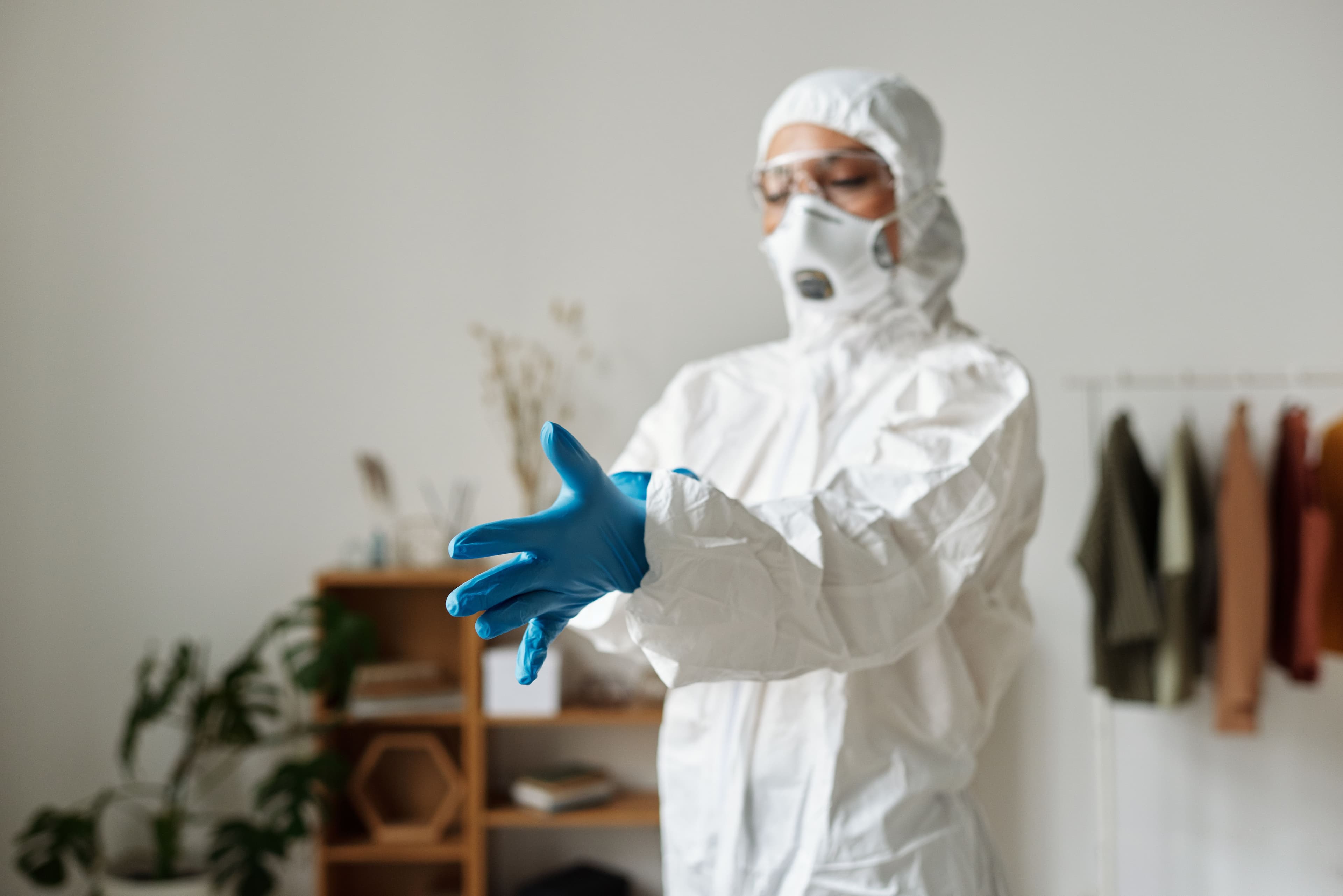
PPE may include disposable gloves, heavy-duty gloves, anti-needle gloves, aprons, coveralls, eye protection, face shield, assessed respiratory protection, safety footwear and high-visibility clothing.
Use separate equipment for toilets, washrooms, kitchens, general areas and specialist or isolation work, applying clean-to-dirty and high-to-low sequencing.
Maintain an approved-product list, safety data sheets, COSHH assessments, controlled dilution, labels, locked storage, spill arrangements, PPE and training.
Classify and segregate contaminated waste at source, use suitable containers, seal and label, store securely, use authorised carriers and facilities, complete documentation and audit subcontractors.
Completion
Confirm scope, remove waste, check residual sharps, leave surfaces safe, remove signs only when appropriate, record products where required, use authorised photographs, obtain sign-off and report exclusions or follow-up needs.
Related policies
Next step
Tell us about your property and receive a tailored proposal.
The form captures property, access, risk and date preferences so Shinezone can triage the work properly.